Gratis marketing scan.
Test
In today’s rapidly evolving digital landscape, small businesses constantly seek effective strategies to attract, engage, and retain their customers. Two of the most powerful, yet often confused, approaches are loyalty marketing and activation marketing. While both aim at cultivating stronger customer relationships, they serve distinct purposes and are optimized for different stages of the customer journey.
In this article, we explore the nuanced differences between loyalty and activation, the benefits of each, and practical guidance on when – and how – to deploy each strategy for maximum impact.
Loyalty marketing refers to initiatives designed to encourage customers to make repeat purchases and build long-term relationships with your brand. These often include loyalty cards, membership programs, digital punch cards, and rewards for ongoing engagement.
Businesses utilizing our digital loyalty solutions at Xis benefit from user-friendly, non-point-based programs tailored for small businesses. Instead of complex tiers or badges reserved for large enterprises, simple stamps or barcodes keep things clear and motivating for every type of customer.
Activation marketing – sometimes called brand activation – is about creating immediate customer engagement and sparking action. These are high-impact campaigns that invite customers to interact with your brand, often for the first time or to introduce a new product, service, or promotion.
At Xis, our brand activation solutions harness digital games, creative campaigns, and SMS/WhatsApp marketing to convert curious users into delighted customers. Whether you want to launch a new service or reawaken dormant buyers, activation is the go-to strategy.
| Aspect | Loyalty | Activation |
|---|---|---|
| Objective | Retention & Repeat Purchases | Acquisition & Engagement |
| Target Group | Existing Customers | New or Inactive Customers |
| Timeframe | Long-Term | Short-Term |
| Tools | Digital cards, ongoing perks | Coupons, games, promos |
| Results | Increased loyalty & lifetime value | Fast conversions & brand exposure |
While there is some overlap, loyalty programs are designed for the marathon – keeping customers coming back. Activation is the sprint – a burst of engagement to convert prospects or jumpstart interest.
Discover how our loyalty programs can enhance your customer retention
Our activation campaigns use gamification, SMS, and WhatsApp to spark immediate action.
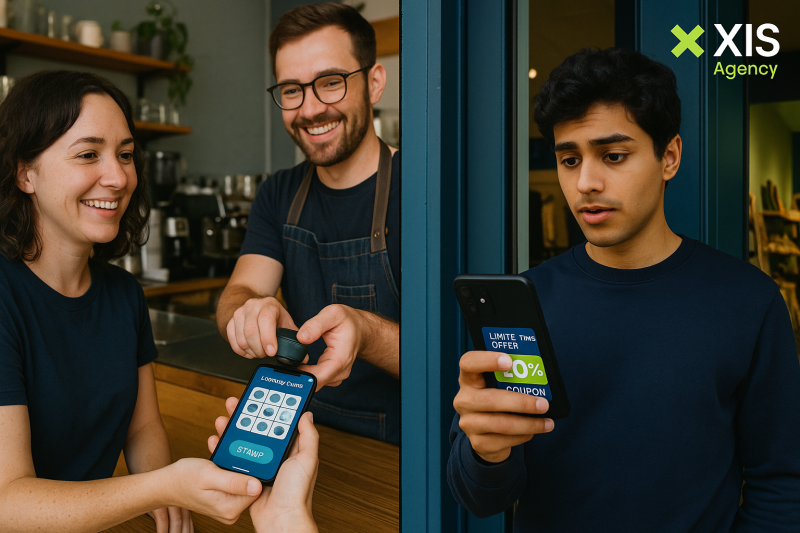
The savviest small businesses blend loyalty and activation. For example, launch a game-based coupon campaign (activation) and then make those same players eligible for a loyalty-based stamp card. This sequence harnesses the power of both: new customers ‘activate’, then stay loyal thanks to ongoing rewards.
This seamless journey is easy to manage with Xis: we plan, create, launch, and analyze integrated campaigns that move customers through every stage of engagement.
Many traditional loyalty and activation platforms are built for large enterprises – with complex points, badges, tiers, or expensive integrations. At Xis, our focus is small business success. We design stamped/QR-based loyalty cards, accessible SMS and WhatsApp tools, and plug-and-play games or coupon campaigns.
Best of all, our team helps you every step of the way — from campaign strategy to analytics. Learn more about us or see our client success stories.
What are the best tools to power up your loyalty and activation marketing?
Curious which tools best fit your goals? Check our approach or get in touch for tailored advice.
The choice between loyalty and activation depends on your business stage, industry, and marketing objectives.
Need practical guidance? Let our experts help you craft a winning strategy.
Loyalty marketing focuses on retaining and rewarding current customers for repeated engagement, while activation marketing aims to initiate specific, immediate actions from new or dormant customers through engaging campaigns.
Absolutely. Activation attracts new customers, while loyalty keeps them coming back. Integrating both creates a powerful customer journey.
No. For most small businesses, simple punch or stamp cards are more effective, easier to manage, and highly motivating.
SMS, WhatsApp, and gamified digital experiences are quick to launch and deliver instant results. Combine these with coupons or flash deals for best outcomes.
Track metrics like repeat visits, redemption rates, new signups, and overall sales growth. Analytics built into Xis tools provide clear, actionable insights.
Both loyalty and activation play vital roles in a small business’s marketing ecosystem. Focus on loyalty to nurture and retain, activation to attract and excite. For best results, let your strategy evolve with customer expectations and make use of the latest digital tools.
If you want to find the right mix for your business or discuss a custom strategy, don’t hesitate: Get in touch!
Test